What is an Algorithmic Trading and How to Use It for the FTMO Challenge?
We’ve all been there: You have a great strategy, but at the crucial moment, you hesitate because of fear. Or conversely, after a winning streak, you "over-leverage" out of sheer euphoria. Perhaps trading is your side hustle, and the best opportunities slip away while you are at work or spending time with your family.
Emotions and time management are a retail trader’s greatest enemies. But what if there was a way to delegate execution to someone who doesn't need sleep and has no feelings? The answer is Algorithmic trading.
What exactly is Algorithmic Trading?
Algorithmic trading (also known as a trading robot or Automated Trading System) is a software algorithm that automatically executes trading operations on behalf of the trader. It is not a "black box" with a magic money button but a logical tool with clearly defined rules.
In practice, it works as follows:
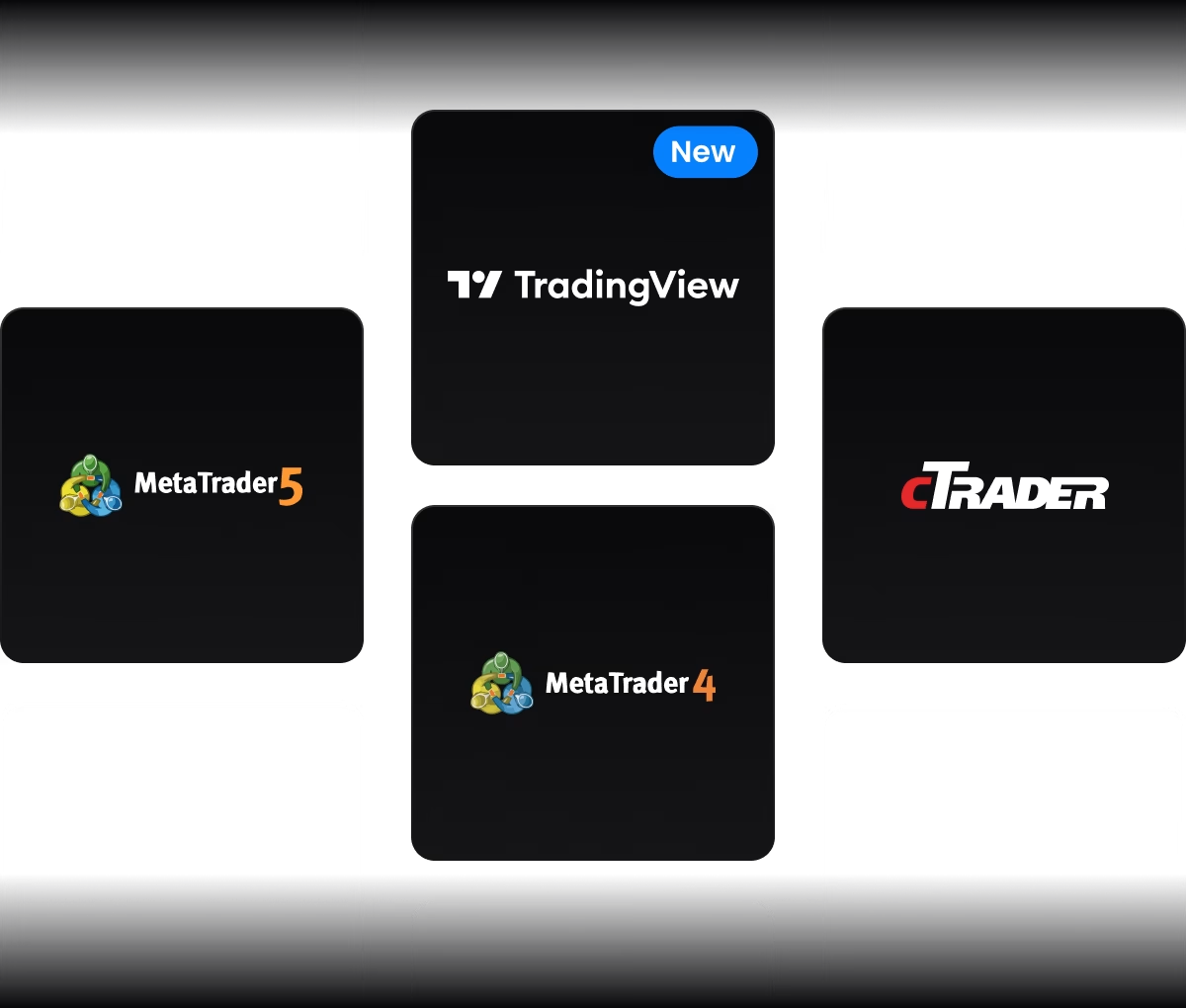
- Code instead of intuition: The trading strategy is written in a programming language (most commonly MQL4 or MQL5).
- Entry conditions: The system monitors the market and waits for a precise combination of factors (e.g., price hitting a specific indicator or time frame).
- Instant execution: Within a fraction of a second after conditions are met, the system opens a position without any hesitation.
- Trade management: The automated trading system automatically sets the Stop Loss and Take Profit and can dynamically manage risk (e.g., moving to Break Even) based on your pre-set parameters.
- Exit: The position is closed exactly according to the algorithm, eliminating the habit of cutting profits short or holding onto losses for too long.
Why is algorithmic trading an attractive choice for traders?
One of the main advantages of algorithmic trading is its ability to follow rules without exception. The system does not doubt, improvise, or change the plan under the influence of emotions.
Key reasons why traders turn to algorithmic trading include:
-
Elimination of Emotions: The algorithm executes trades exactly according to the set rules, without fear or greed.
-
Time Efficiency: A trader does not need to constantly monitor the markets. The algorithmic trading setup works even when you are away from your platform.
-
Backtesting: You can verify your strategy on years of historical data in seconds. You no longer have to guess if your system works; you will know.
-
Diversification: A robot can track dozens of symbols simultaneously, spreading your risk and allowing you to trade multiple strategies at once.
How to enter the world of algorithmic trading?
There are two main paths into the world of algorithms. The first is purchasing or renting a ready-made system. However, you must be extremely cautious here, as the market is saturated with systems that look great on historical data but fail in real time.
Tip: If you are considering this path, be sure to read our article on what to look out for when choosing an automated system to avoid falling for empty promises and marketing traps.
The second, and more sustainable long-term path, is developing your own solution. A custom algorithm gives you 100% control over risk management and perfectly replicates your trading logic. If you're interested in learning how to build such an assistant, we’ve prepared a practical guide to MQL programming to walk you through the basics of coding.
Using algorithmic trading at FTMO: What is allowed?
Modern trading and technology go hand in hand. We are often asked if algorithms are allowed on your journey toward an FTMO Account. The answer is simple: yes, you are allowed to use algorithmic trading at FTMO.
We understand that machines can react with a speed that humans cannot match. However, to use technology safely in our simulated environment, keep these two essential points in mind:
-
Responsibility for Objectives: Although the code enters the trades, you remain responsible for meeting the Trading Objectives (such as the Maximum Daily Loss). Ensure your robot has the correct risk management settings for your specific account type.
-
Strategy Uniqueness: If you use an automated trading system from a third party, be wary. If too many clients use the exact same strategy simultaneously, you may run into the maximum capital allocation rule. Ideally, your strategy should be unique to avoid the risk of duplicated trading.
Conclusion
Algorithmic trading can be an effective tool for maintaining discipline and following a trading plan, but it does not guarantee success on its own. Even in the FTMO Challenge, the responsibility for risk management and meeting trading objectives always remains with the trader, regardless of whether they trade manually or using an automated system.
Curious if algorithms have a chance to succeed in the real world? Check out the results of our Big Algo-Trading Test, where we put their performance to the test in practice.
This article is for informational purposes only, and some information may not reflect the current service offering or product features. Please always verify the latest terms on the official product pages.
About FTMO
FTMO has developed a two-step evaluation process to find trading talents. Upon successful completion, you may be eligible for an FTMO Rewards Account with a balance of up to $200,000 in simulated funds. How does it work?