“Trading is not a speedrun game; it is a continuous improvement game.”
Trading is a marathon, not a sprint. Sakawrung, Alexander, and Bartosz share the hard-learned lessons that transformed their trading careers. Learn why they stopped fighting the market, how they overcame the urge to overtrade, and why mastering patience is the only true way to secure and maintain an FTMO Account.
Trader Sakawrung: “My biggest obstacle was self-doubt.”

What inspires you to pursue trading?
I started trading for the money, and that is still true today. However, what drives me even more now is the desire to constantly learn, improve my trading skills, and grow every day.
What was more difficult than expected during your FTMO Challenge or Verification?
The hardest part was managing stress and pressure. I had to control my emotions and strictly follow my plan, especially when facing drawdowns and an unfavourable market. I learned that the key is knowing when to step back and stop trading to wait for the best possible setups.

What was the hardest obstacle on your trading journey?
My biggest obstacle was self-doubt. In the past, I always questioned if I could really make it, especially after losing streaks or blowing accounts. Losing confidence and taking time to rebuild it was incredibly challenging. For me, overcoming that doubt and restoring my self-belief was much harder than strictly keeping discipline.
What does your risk management plan look like?
My risk management rules are:
- Minimum reward-to-risk ratio of 2:1 or higher.
- Lot Sizes are calculated to limit total risk to 1%–2% of the account per day.
- A strict Stop Loss is set on every order at a verified technical level.
- If my daily Drawdown limit is reached, I stop trading immediately.
What was the most difficult during your FTMO Challenge or Verification, and how did you overcome it?
The hardest part was facing severe personal challenges during the Evaluation Process. It doubled the difficulty because I had to manage my trading psychology during bad market conditions while dealing with life issues at the same time, causing immense stress. I overcame it by studying the law of attraction and reading Trading in the Zone by Mark Douglas. These resources helped me shift my mindset, reprogram my subconscious, and practice meditation. This allowed me to master my emotions, rise above the difficult times, and successfully complete the Verification.
What is the number one piece of advice you would give to a new trader?
Don’t be stubborn. The more you surrender to the market, the more the market will reward you. Stop trying to fight the market or prove you are right. Instead, accept the market’s reality, follow your system with zero ego, and let the profits come naturally.

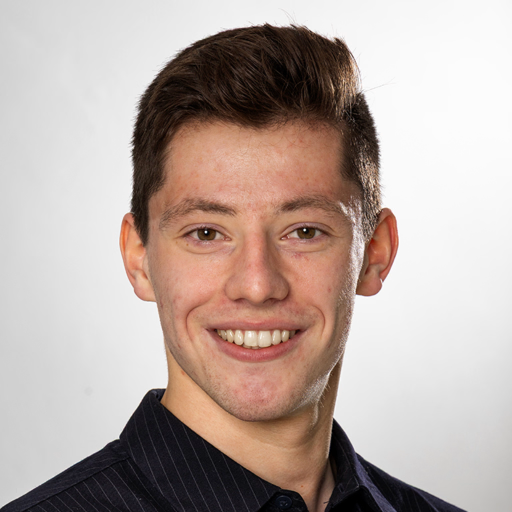
Trader Alexander: “The most important lecture was to accept a bad trade as fast as possible and close it.”
What do you think is the key to long-term success in trading?
You need to be very patient and trust yourself if you trade. You should never over-size any positions; otherwise, it puts a lot of pressure on you, which makes your mind go crazy. If there is no setup to trade, you should never force a trade; the best thing in this situation is to relax and turn off the charts. Trading is not a speedrun game; it is a continuous improvement game that takes decades. You should never buy lottery tickets… You should buy securities.
How would you rate your experience with FTMO?
The FTMO experience is very good so far. It gives the trader a bunch of tools to improve yourself and makes the trading experience smooth. I have a positive experience with FTMO, and I am very glad to be an FTMO Trader.
How did you manage your emotions when you were in a losing trade?
I always tried to look back at my past mistakes, when I had the same emotions as in a losing trade. With that, I could relate past mistakes to the current situation and calm my nerves. I kept a little journal with all my emotions and wrote down everything I should and shouldn’t do in such a situation. I have 10 sheets of my biggest mistakes written down, with all the corresponding improvements. If I felt any pressure at all or had another losing trade, I immediately grabbed my sheets of paper and looked at the tips I’d given my future self. I always tried to be as calm, cool, and open-minded as possible in a losing trade. The most important lecture was to accept a bad trade as fast as possible and close it.
Has your psychology ever affected your trading plan?
Yes, definitely. Like I said, if I were in a high-pressure situation — for example, if I were about to pass an FTMO Challenge or blow an account — my vision went dark. I got tunnel vision and had no idea what I was doing. I also had lots of emotional roller coasters at the beginning of my trading career, which led to many losses. But I managed to control myself over time and erased the emotional mistakes almost completely.
What was more difficult than expected during your FTMO Challenge or Verification?
To be 100% clear in my mind at all times, to not make stupid trades just for fun, and to not fall back into bad habits from the past. I also had great trouble just waiting for my profit because I wanted the Challenge to end as quickly as possible.
One piece of advice for people starting the FTMO Challenge now.
Take it seriously, do not over-size, be patient, and write down all your wins and failures. The most important part is to go through the emotional state you’re in when you open any position. (Don’t buy lottery tickets…)

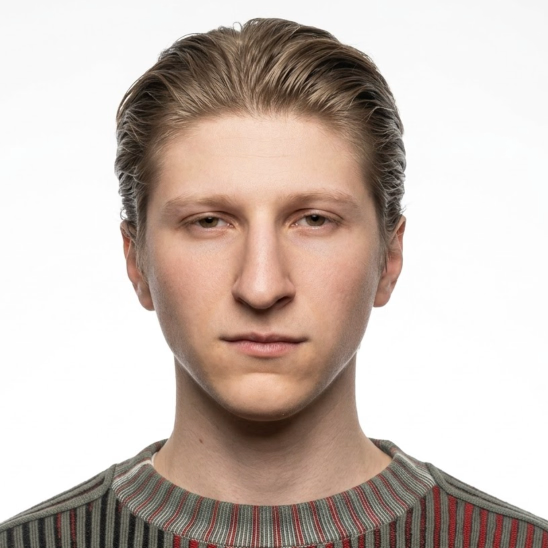
Trader Bartosz: “I learned to treat a loss as a cost of doing business, not as something I have to win back immediately.”
What inspires you to pursue trading?
Freedom and independence. Trading is a skill I build myself through my own mistakes; no one can give it to me, and no one can take it away. What draws me in is that the market is fair: it doesn’t care who you are, only whether you make good decisions. It’s a long-term project, part of a bigger financial plan I’m building step by step.
What was more difficult than expected during your FTMO Challenge or Verification?
Patience and self-control after a break. I previously lost a funded FTMO Account to overconfidence and revenge trading, so I took a few weeks to reset. The hardest part was stopping myself from making too many trades while chasing the move. My strategy was solid; the challenge was my mindset, not the market.
How did you manage your emotions when you were in a losing trade?
I learned to treat a loss as a cost of doing business, not as something I have to win back immediately. I set my Stop Loss where my scenario is invalidated, and I don’t move it closer just to reduce the loss – that used to be my mistake. If a trade doesn’t work, I accept the result and don’t open new positions the same day to recover. A closed day is a closed day.
What do you think is the key to long-term success in trading?
Discipline and risk management above everything. You can have an edge, but if you don’t control position size and emotions, you’ll blow the account anyway. The key is trusting your process, not your momentary emotions, and sticking to the plan, especially in the tempting moments, because that’s exactly when people break their rules. Success isn’t one good day; it’s a series of repeatable, calm decisions.
Do you have a trading plan in place, and do you follow it strictly?
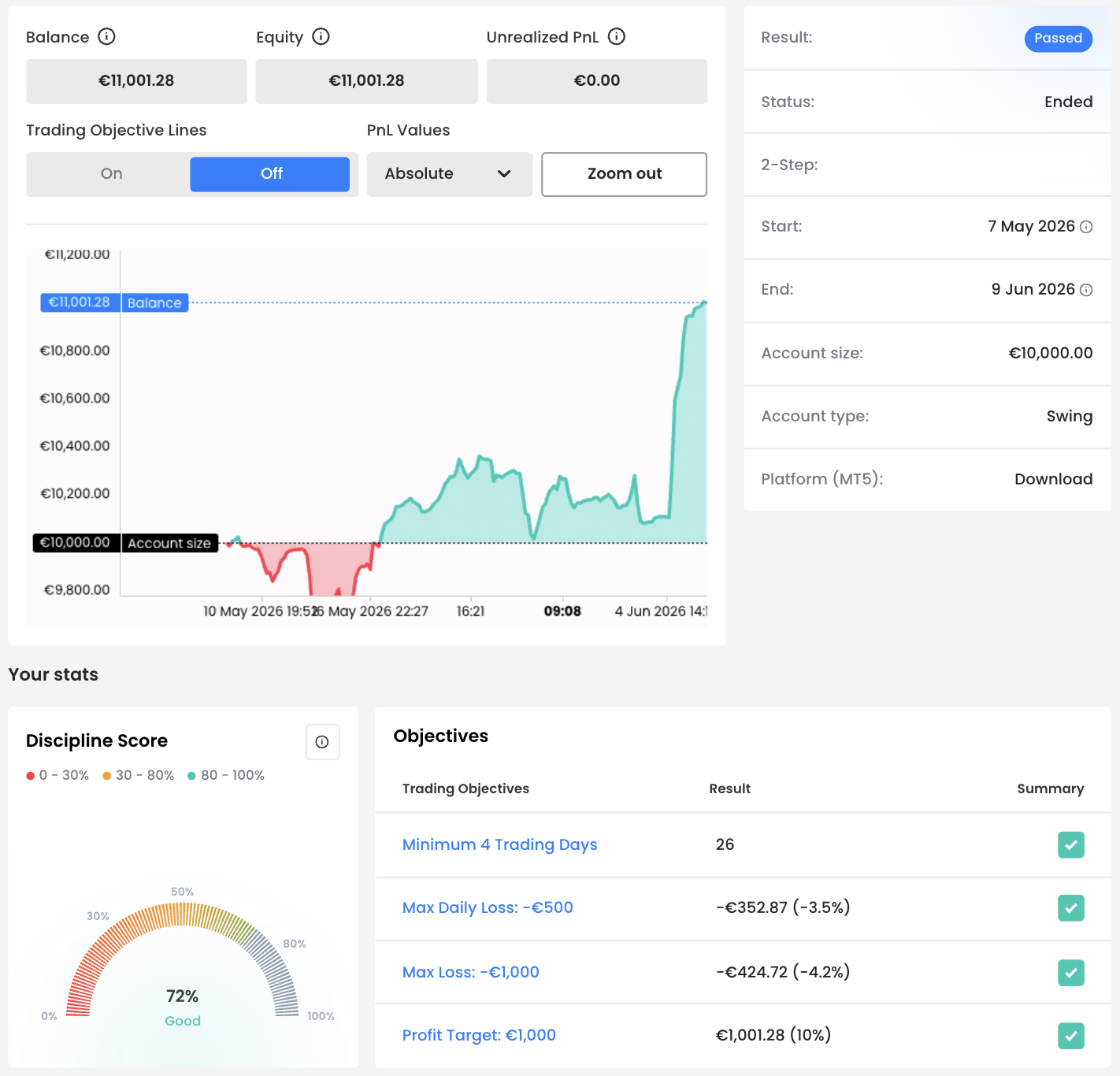
Yes. I have a clear plan: a daily target, a reduction to a maximum of 2-3 trades, a hard loss limit, closing once the target is hit, and no trading on high-impact news days. I’m working on following it strictly even when the market tempts me to break the rules. I passed this last FTMO Challenge precisely because of that — I exited in profit before the big FOMC move, because that was the plan, not because I predicted what would happen.
What is the number one piece of advice you would give to a new trader?
Less is more. Two calm, well-thought-out trades beat ten nervous ones. And don’t rush; self-trust is built through plans you actually follow, not through deciding you “trust yourself” already. Discipline first; profits come as a result of it, not the other way around.

All information provided herein is intended solely for educational purposes related to trading on financial markets and does not constitute investment advice or serve in any way as a specific investment recommendation. Please read the full disclosure here.


- As many Free Trials as you need
- Up to $200,000 account
- No time limit

- Unlimited Evaluation Accounts
- Trade with up to 3 Sim-Funded accounts
- Up to $450,000 in simulated capital
- Keep up to 90% of your simulated profits


Worldwide Reviews