


Decoding Gamma Exposure (GEX) for CFD Traders
For many traders, price movements in financial markets appear to be the exclusive result of fundamental news or technical chart patterns. However, there is another, often overlooked layer of market structure that has a profound impact on liquidity and volatility: the options market and the associated hedging activities of institutions.
A key concept that helps us understand this dynamic is Gamma Exposure (GEX). In this article, we will explain how GEX works, why it also affects CFD markets, and how you can integrate this information into your trading plan and risk management.
The Role of Market Makers
To understand GEX, we must first comprehend the role of market makers. Their primary objective in the options market is to provide liquidity – they match buy and sell orders and profit from the bid-ask spread.
When a market maker sells an option to a client, they assume directional risk. As market makers do not wish to speculate on market direction, they must immediately neutralise this risk. They do this by buying or selling the underlying asset (such as shares or equity index futures). This process is known as delta hedging.
Delta and Gamma: Core Concepts
When managing risk, market makers monitor two crucial parameters:
- Delta: Indicates how much an option’s price will change for a 1-point move in the underlying asset. Market makers strive to maintain their portfolios’ delta-neutral’ (overall delta equals zero).
- Gamma: Represents the rate at which Delta changes when the underlying asset moves.
Because the price of the underlying asset is constantly changing, the delta of the options also changes. Market makers must therefore continuously adjust (re-hedge) their positions – buying or selling additional underlying assets. It is precisely this necessity for constant adjustment that creates mechanical order flows in the market, which can either dampen or amplify volatility.

Gamma Exposure (GEX) and Market Regimes
Gamma Exposure (GEX) is the aggregate value of gamma across all market participants, particularly market makers, expressed in monetary terms. This indicator shows whether institutional hedging activities will stabilise the market or contribute to higher volatility.
Based on this, we distinguish two primary market regimes:
1. Positive GEX (Positive Gamma Regime)
In this environment, market makers hold an overall ‘long gamma’ position. Their hedging algorithms function as follows:
- When the price of the underlying asset falls, they must buy the asset.
- When the price of the underlying asset rises, they must sell the asset.
Market impact: These transactions work against the prevailing trend. The market tends to be calmer, with lower volatility. Prices more frequently oscillate within narrower ranges and revert to the mean.
2. Negative GEX (Negative Gamma Regime)
In this environment, market makers are in a ‘short gamma’ position. The logic of their hedging reverses:
- When the price of the underlying asset falls, they must sell the asset.
- When the price of the underlying asset rises, they must buy the asset.
Market impact: These transactions reinforce the current direction of movement. When the market falls, market makers’ sales accelerate the decline. This environment is characterised by heightened volatility, sharp movements, gaps, and strong trends (often referred to as a gamma squeeze).
Key Options Levels
By analysing the options market, we can identify specific price levels (strikes) where the largest volume of open interest is concentrated. These levels frequently act as strong zones of support and resistance.
- Call wall: The strike price with the largest concentration of call options. It often acts as a robust resistance level, as market makers must sell the underlying asset here, thereby impeding further price growth.
- Put wall: The level with the greatest concentration of put options. It functions as strong support. As the price declines towards this level, algorithmic buying by market makers often stabilises the price.
- Gamma flip: The level at which the overall market GEX shifts from positive to negative, or vice versa. It is a critical inflection point. A move below the gamma flip typically signals a transition into a higher volatility regime.
Options Expiration (OPEX) and Its Significance
The options expiration period (OPEX), which most commonly falls on the third Friday of the month, is crucial for market structure. Particular attention should be paid to days known as triple witching, when equity options, index options, and index futures all expire simultaneously.
Prior to OPEX, a common phenomenon called ‘strike pinning’ occurs, where hedging activities keep the market price in close proximity to a level with high open interest. Following the expiration of a large volume of options, these dampening forces dissipate, which can lead to the market uncoiling and sudden changes in direction or a surge in volatility at the start of the new week.
How to Utilise GEX in Trading
Even if you trade instruments such as CFDs on indices (e.g., US500, GER40) or Forex, the mechanics of the options market directly influence these instruments, as CFD derivatives closely track the price of the underlying asset. As a disciplined trader, you can use GEX information when planning your trades:

1. Adapting Your Trading Approach to the Market Regime
Knowing the current GEX regime will help you set the right expectations regarding volatility:
- In a positive GEX regime, it is advisable to focus on range trading. Scalping and looking for reversal patterns at the edges of the range usually have a higher success rate, as breakouts frequently fail.
- In a negative GEX regime, traders should exercise more caution when attempting to catch reversals. This environment favours trend-following strategies and trading breakouts and demands stricter risk management, potentially reducing position sizes due to wider swings.
2. Confluence with Technical Analysis
Options levels should not be traded in isolation. They work best as an additional influence on your existing strategy. If your setup relies on a significant price action structure and this level coincides with a put wall or call wall, the probability of a successful trade increases.
3. Risk Management and Stop Loss Placement
GEX information can assist you in the logical placement of protective orders. For instance, if you are selling (shorting) just below a call wall resistance, your stop loss should be placed with a sufficient buffer above this level. If the market breaches this level with momentum, forced buying (hedging) by market makers occurs, which can trigger a gamma squeeze. In such a scenario, it is vital to strictly adhere to your stop loss and avoid fighting established market mechanics.
Conclusion
Understanding market structure and the underlying forces driving it is a crucial step in the development of any trader. Gamma exposure and options levels are not a guarantee of profit, nor are they a tool that will predict price movements with 100% accuracy. However, they provide valuable context that will help you read market conditions more effectively, adapt your strategy to current volatility, and most importantly, manage your risk more professionally.
Success in trading does not stem from finding a magic indicator but from building a robust plan, exercising discipline, and understanding the market as a complex system.

All information provided herein is intended solely for educational purposes related to trading on financial markets and does not constitute investment advice or serve in any way as a specific investment recommendation. Please read the full disclosure here.







- As many Free Trials as you need
- Up to $200,000 account
- No time limit
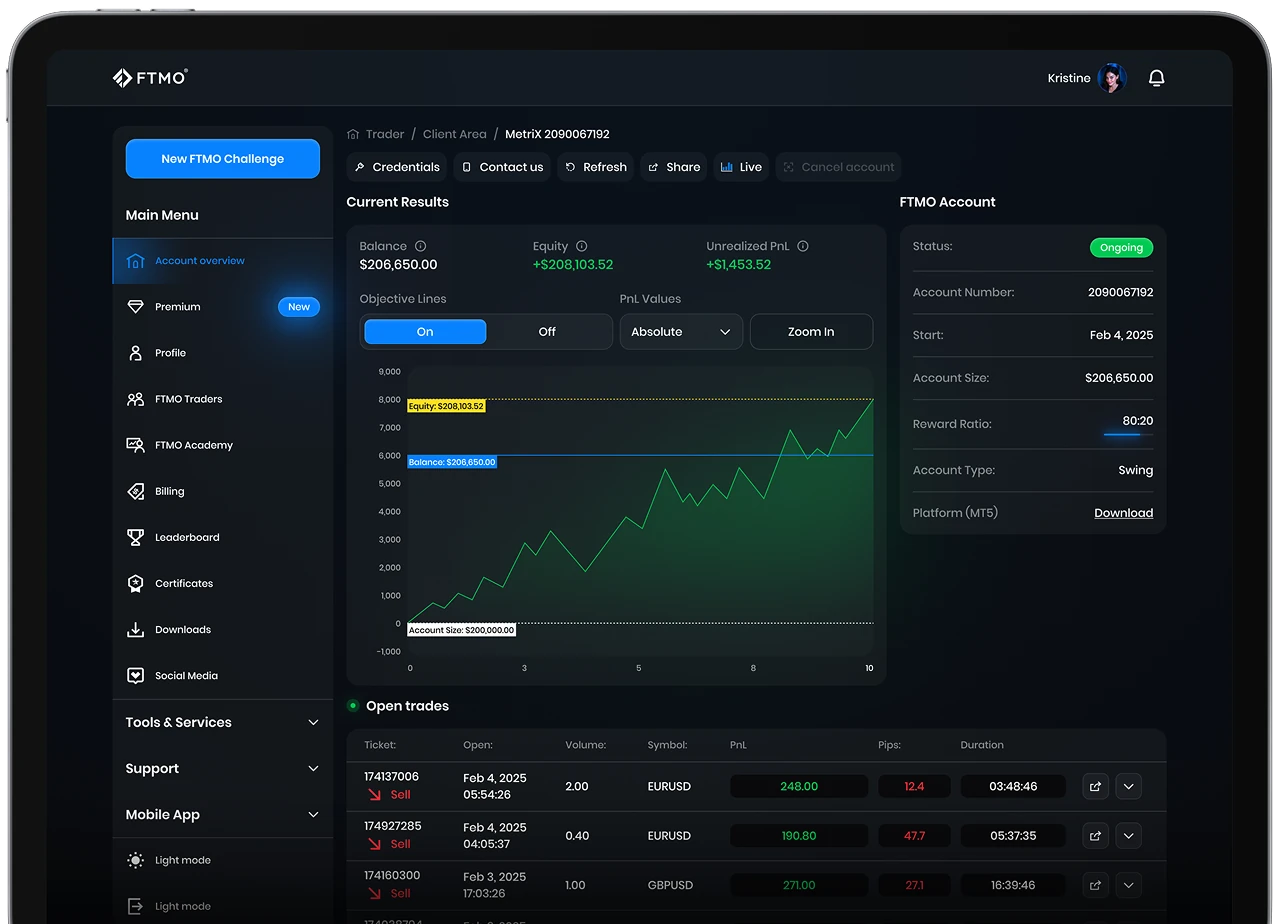

- Unlimited Evaluation Accounts
- Trade with up to 3 Sim-Funded accounts
- Up to $450,000 in simulated capital
- Keep up to 90% of your simulated profits


Worldwide Reviews