- Start your path to your Sim-Funded Account
- Up to $450,000 in simulated capital
- Tight spreads, deep liquidity
Worldwide Reviews
Every rule you need to meet on each account, from Evaluation to your first daily payout.
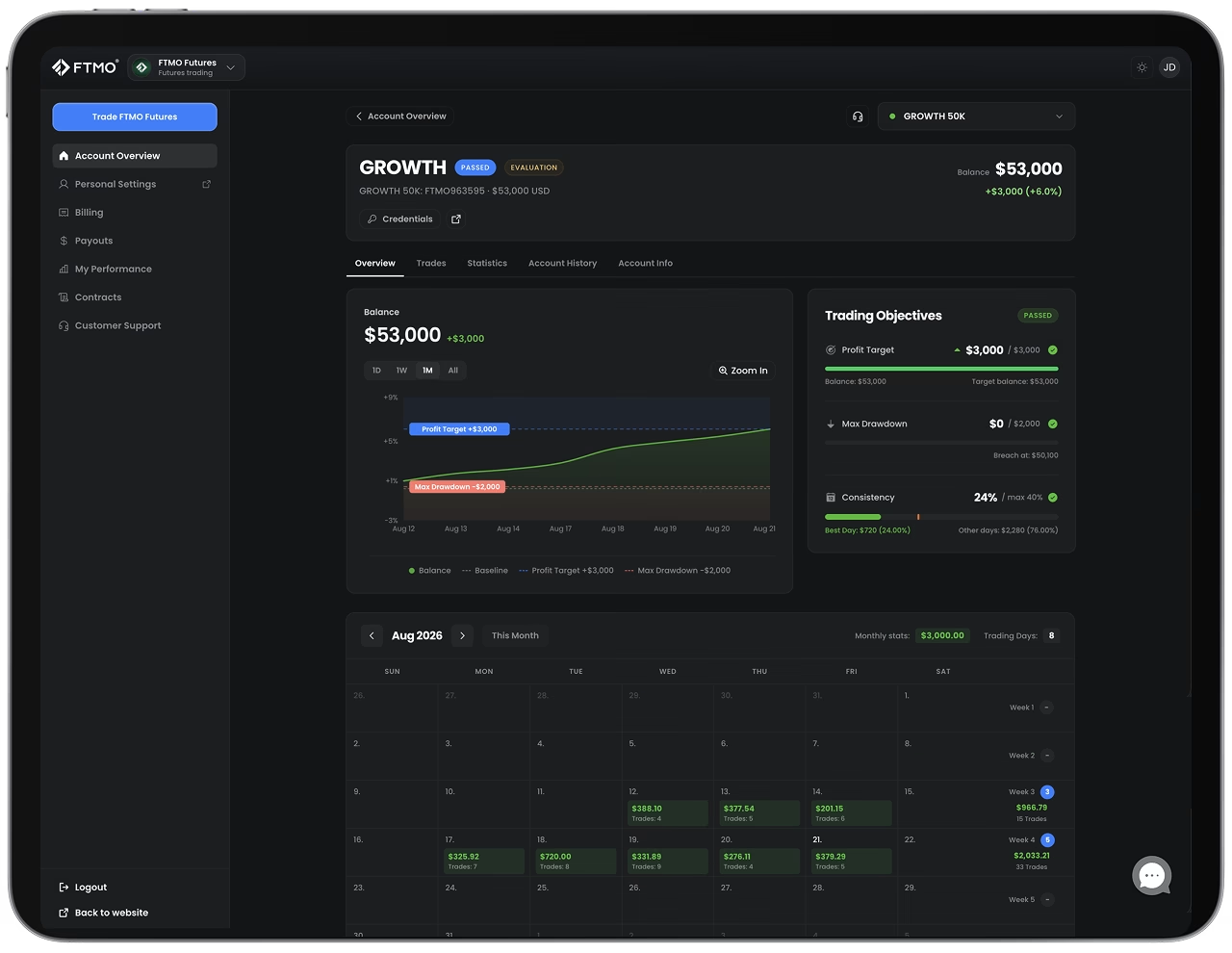
To complete the Profit Target, you must achieve a defined minimum profit above the Initial Simulated Capital on the account.
You will meet this objective once your account balance exceeds the Initial Simulated Capital by the required Profit Target, with all positions closed.
The Profit Target is $3,000.
To complete the Profit Target, you must achieve a defined minimum profit above the Initial Simulated Capital on the assigned account.
You will meet this objective once your account balance reaches the Initial Simulated Capital by the required Profit Target with all positions closed.
Accounts are assessed for eligibility to pass at 5:05 p.m. ET.
This rule only applies to the Evaluation phase. There is no Profit Target on the subsequent Sim-Funded Account.
Profit Target = $6,000
Balance required for passing = $106,000
To complete the Profit Target, you must achieve a defined minimum profit above the Initial Simulated Capital on the assigned account.
You will meet this objective once your account balance reaches the Initial Simulated Capital by the required Profit Target with all positions closed.
Accounts are assessed for eligibility to pass at 5:05 p.m. ET.
This rule only applies to the Evaluation phase. There is no Profit Target on the subsequent Sim-Funded Account.
Profit Target = $9,000
Balance required for passing = $109,000
To complete the Profit Target, you must achieve a defined minimum profit above the Initial Simulated Capital on the account.
You will meet this objective once your account balance exceeds the Initial Simulated Capital by the required Profit Target, with all positions closed.
The Profit Target is $3,000.
To complete the Profit Target, you must achieve a defined minimum profit above the Initial Simulated Capital on the account.
You will meet this objective once your account balance exceeds the Initial Simulated Capital by the required Profit Target, with all positions closed.
The Profit Target is $6,000.
To complete the Profit Target, you must achieve a defined minimum profit above the Initial Simulated Capital on the account.
You will meet this objective once your account balance exceeds the Initial Simulated Capital by the required Profit Target, with all positions closed.
The Profit Target is $9,000.
The Maximum Drawdown rule establishes an end-of-day trailing limit (the Maximum Drawdown Limit) which your account equity (i.e., Balance + Open Positions P&L – Commissions) cannot hit at any point. If equity hits this limit, the rule is considered violated and the Evaluation is unsuccessful.
The Maximum Drawdown Limit is calculated at the start of each trading day as the difference between the highest account balance recorded at the close of any preceding trading day (or the Initial Simulated Capital if higher) and the applicable Maximum Drawdown Amount.
The limit can only increase, never decrease. Once the Maximum Drawdown Limit reaches the Initial Simulated Capital, it locks permanently at that figure for the remaining duration of the Evaluation, unless (i) you pay a Reset Fee, or (ii) you breach the Maximum Drawdown Limit and wait for the next monthly subscription.
The Maximum Drawdown Amount is $2,000.
Limit for Day 1:
Limit for Day 2:
Limit for Day 3:
Limit for Day 4:
The Maximum Drawdown rule establishes an end-of-day trailing limit (the Maximum Drawdown Limit) which your account equity (i.e., Balance + Open Positions P&L – Commissions) cannot hit at any point. If equity hits this limit, the rule is considered violated and the Evaluation is unsuccessful.
The Maximum Drawdown Limit is calculated at the start of each trading day as the difference between the highest account balance recorded at the close of any preceding trading day (or the Initial Simulated Capital if higher) and the applicable Maximum Drawdown Amount.
The limit can only increase, never decrease. Once the Maximum Drawdown Limit reaches the Initial Simulated Capital, it locks permanently at that figure for the remaining duration of the Evaluation, unless (i) you pay a Reset Fee, or (ii) you breach the Maximum Drawdown Limit and wait for the next monthly subscription.
The Maximum Drawdown Amount is $3,500.
Limit for Day 1:
Limit for Day 2:
Limit for Day 3:
Limit for Day 4:
The Maximum Drawdown rule establishes an end-of-day trailing limit (the Maximum Drawdown Limit) which your account equity (i.e., Balance + Open Positions P&L – Commissions) cannot hit at any point. If equity hits this limit, the rule is considered violated and the Evaluation is unsuccessful.
The Maximum Drawdown Limit is calculated at the start of each trading day as the difference between the highest account balance recorded at the close of any preceding trading day (or the Initial Simulated Capital if higher) and the applicable Maximum Drawdown Amount.
The limit can only increase, never decrease. Once the Maximum Drawdown Limit reaches the Initial Simulated Capital, it locks permanently at that figure for the remaining duration of the Evaluation, unless (i) you pay a Reset Fee, or (ii) you breach the Maximum Drawdown Limit and wait for the next monthly subscription.
The Maximum Drawdown Amount is $5,000.
Limit for Day 1:
Limit for Day 2:
Limit for Day 3:
Limit for Day 4:
The Maximum Drawdown rule establishes an end-of-day trailing limit (the Maximum Drawdown Limit) which your account equity (i.e., Balance + Open Positions P&L – Commissions) cannot hit at any point. If equity hits this limit, the rule is considered violated and the Evaluation is unsuccessful.
The Maximum Drawdown Limit is calculated at the start of each trading day as the difference between the highest account balance recorded at the close of any preceding trading day (or the Initial Simulated Capital if higher) and the applicable Maximum Drawdown Amount.
The limit can only increase, never decrease. Once the Maximum Drawdown Limit reaches the Initial Simulated Capital, it locks permanently at that figure for the remaining duration of the Evaluation, unless (i) you pay a Reset Fee, or (ii) you breach the Maximum Drawdown Limit or Daily Loss Limit and wait for the next monthly subscription.
The Maximum Drawdown Amount is $3,000.
Limit for Day 1:
Limit for Day 2:
Limit for Day 3:
Limit for Day 4:
The Maximum Drawdown rule establishes an end-of-day trailing limit (the Maximum Drawdown Limit) which your account equity (i.e., Balance + Open Positions P&L – Commissions) cannot hit at any point. If equity hits this limit, the rule is considered violated and the Evaluation is unsuccessful.
The Maximum Drawdown Limit is calculated at the start of each trading day as the difference between the highest account balance recorded at the close of any preceding trading day (or the Initial Simulated Capital if higher) and the applicable Maximum Drawdown Amount.
The limit can only increase, never decrease. Once the Maximum Drawdown Limit reaches the Initial Simulated Capital, it locks permanently at that figure for the remaining duration of the Evaluation, unless (i) you pay a Reset Fee, or (ii) you breach the Maximum Drawdown Limit or Daily Loss Limit and wait for the next monthly subscription.
The Maximum Drawdown Amount is $4,500.
Limit for Day 1:
Limit for Day 2:
Limit for Day 3:
Limit for Day 4:
The Maximum Drawdown rule establishes an end-of-day trailing limit (the Maximum Drawdown Limit) which your account equity (i.e., Balance + Open Positions P&L – Commissions) cannot hit at any point. If equity hits this limit, the rule is considered violated and the Evaluation is unsuccessful.
The Maximum Drawdown Limit is calculated at the start of each trading day as the difference between the highest account balance recorded at the close of any preceding trading day (or the Initial Simulated Capital if higher) and the applicable Maximum Drawdown Amount.
The limit can only increase, never decrease. Once the Maximum Drawdown Limit reaches the Initial Simulated Capital, it locks permanently at that figure for the remaining duration of the Evaluation, unless (i) you pay a Reset Fee, or (ii) you breach the Maximum Drawdown Limit or Daily Loss Limit and wait for the next monthly subscription.
The Maximum Drawdown Amount is $6,000.
Limit for Day 1:
Limit for Day 2:
Limit for Day 3:
Limit for Day 4:
There is no Daily Loss Limit during the Evaluation phase for the Growth Account.
The Daily Loss Limit rule establishes a limit (the Daily Loss Limit) which your account equity (i.e., Balance + Open Positions P&L – Commissions) cannot hit in a single trading day. If the equity hits this limit, the rule is considered violated.
The Daily Loss Limit is calculated at the start of each trading day as the difference between the account balance at the start of that trading day and the applicable Daily Loss Limit Amount.
The Daily Loss Limit Amount is $1,000.
On the first day, the account balance used for the limit calculation is the Initial Simulated Capital.
The Pro Account applies a Hard Daily Loss Limit in the Evaluation. If the limit is breached, the Evaluation is unsuccessful.
Limit for Day 1:
Limit for Day 2:
Limit for Day 3:
If equity hits the applicable Daily Loss Limit at any point during the trading day, the account is immediately and permanently terminated.
The Daily Loss Limit rule establishes a limit (the Daily Loss Limit) which your account equity (i.e., Balance + Open Positions P&L – Commissions) cannot hit in a single trading day. If the equity hits this limit, the rule is considered violated.
The Daily Loss Limit is calculated at the start of each trading day as the difference between the account balance at the start of that trading day and the applicable Daily Loss Limit Amount.
The Daily Loss Limit Amount is $1,500.
On the first day, the account balance used for the limit calculation is the Initial Simulated Capital.
The Pro Account applies a Hard Daily Loss Limit in the Evaluation. If the limit is breached, the Evaluation is unsuccessful.
Limit for Day 1:
Limit for Day 2:
Limit for Day 3:
If equity hits the applicable Daily Loss Limit at any point during the trading day, the account is immediately and permanently terminated.
The Daily Loss Limit rule establishes a limit (the Daily Loss Limit) which your account equity (i.e., Balance + Open Positions P&L – Commissions) cannot hit in a single trading day. If the equity hits this limit, the rule is considered violated.
The Daily Loss Limit is calculated at the start of each trading day as the difference between the account balance at the start of that trading day and the applicable Daily Loss Limit Amount.
The Daily Loss Limit Amount is $2,000.
On the first day, the account balance used for the limit calculation is the Initial Simulated Capital.
The Pro Account applies a Hard Daily Loss Limit in the Evaluation. If the limit is breached, the Evaluation is unsuccessful.
Limit for Day 1:
Limit for Day 2:
Limit for Day 3:
If equity hits the applicable Daily Loss Limit at any point during the trading day, the account is immediately and permanently terminated.
To pass the Evaluation, the Consistency Rule requires that your single most profitable trading day (the Best Day) does not represent more than 40% of your total profit.
The total profit is the cumulative sum of closed profits and losses across all trading days in the Evaluation phase. The Best Day is defined as the single day on which the highest closed profit was achieved, measured at the end of the trading day.
Exceeding the Consistency Rule limit is not treated as a rule breach. However, you must continue trading to accumulate additional profit until your Best Day represents 40% or less of your total profit in order to pass the Evaluation.
P&L per Day:
Results at the end of Day 2:
Because the profit achieved on the Best Day exceeds the 40% allowed limit, the Consistency Rule is not satisfied. If Day 1 remains your Best Day, your total profit will need to reach at least $5,000 to pass.
To pass the Evaluation, the Consistency Rule requires that your single most profitable trading day (the Best Day) does not represent more than 40% of your total profit.
The total profit is the cumulative sum of closed profits and losses across all trading days in the Evaluation phase. The Best Day is defined as the single day on which the highest closed profit was achieved, measured at the end of the trading day.
Exceeding the Consistency Rule limit is not treated as a rule breach. However, you must continue trading to accumulate additional profit until your Best Day represents 40% or less of your total profit in order to pass the Evaluation.
P&L per Day:
Results at the end of Day 2:
Because the profit achieved on the Best Day exceeds the 40% allowed limit, the Consistency Rule is not satisfied. If Day 1 remains your Best Day, your total profit will need to reach at least $10,000 to pass.
To pass the Evaluation, the Consistency Rule requires that your single most profitable trading day (the Best Day) does not represent more than 40% of your total profit.
The total profit is the cumulative sum of closed profits and losses across all trading days in the Evaluation phase. The Best Day is defined as the single day on which the highest closed profit was achieved, measured at the end of the trading day.
Exceeding the Consistency Rule limit is not treated as a rule breach. However, you must continue trading to accumulate additional profit until your Best Day represents 40% or less of your total profit in order to pass the Evaluation.
P&L per Day:
Results at the end of Day 2:
Because the profit achieved on the Best Day exceeds the 40% allowed limit, the Consistency Rule is not satisfied. If Day 1 remains your Best Day, your total profit will need to reach at least $15,000 to pass.
To pass the Evaluation, the Consistency Rule requires that your single most profitable trading day (the Best Day) does not represent more than 50% of your total profit.
The total profit is the cumulative sum of closed profits and losses across all trading days in the Evaluation phase. The Best Day is defined as the single day on which the highest closed profit was achieved, measured at the end of the trading day.
Exceeding the Consistency Rule limit is not treated as a rule breach. However, you must continue trading to accumulate additional profit until your Best Day represents 50% or less of your total profit in order to pass the Evaluation.
P&L per Day:
Results at the end of Day 2:
Because the profit achieved on the Best Day exceeds the 50% allowed limit, the Consistency Rule is not satisfied. If Day 1 remains your Best Day, your total profit will need to reach at least $5,000 to pass.
To pass the Evaluation, the Consistency Rule requires that your single most profitable trading day (the Best Day) does not represent more than 50% of your total profit.
The total profit is the cumulative sum of closed profits and losses across all trading days in the Evaluation phase. The Best Day is defined as the single day on which the highest closed profit was achieved, measured at the end of the trading day.
Exceeding the Consistency Rule limit is not treated as a rule breach. However, you must continue trading to accumulate additional profit until your Best Day represents 50% or less of your total profit in order to pass the Evaluation.
P&L per Day:
Results at the end of Day 2:
Because the profit achieved on the Best Day exceeds the 50% allowed limit, the Consistency Rule is not satisfied. If Day 1 remains your Best Day, your total profit will need to reach at least $10,000 to pass.
To pass the Evaluation, the Consistency Rule requires that your single most profitable trading day (the Best Day) does not represent more than 50% of your total profit.
The total profit is the cumulative sum of closed profits and losses across all trading days in the Evaluation phase. The Best Day is defined as the single day on which the highest closed profit was achieved, measured at the end of the trading day.
Exceeding the Consistency Rule limit is not treated as a rule breach. However, you must continue trading to accumulate additional profit until your Best Day represents 50% or less of your total profit in order to pass the Evaluation.
P&L per Day:
Results at the end of Day 2:
Because the profit achieved on the Best Day exceeds the 50% allowed limit, the Consistency Rule is not satisfied. If Day 1 remains your Best Day, your total profit will need to reach at least $15,000 to pass.
The Max Contracts rule limits the maximum number of contracts you may hold simultaneously at any given time, across all instruments.
The Max Contracts limit on your Evaluation Account is 5 contracts:
You can hold 5 Standard / Mini contracts, 50 Micro contracts, or any mix within the limit.
You can hold:
The Max Contracts rule limits the maximum number of contracts you may hold simultaneously at any given time, across all instruments.
The Max Contracts limit on your Evaluation Account is 10 contracts:
You can hold 10 Standard / Mini contracts, 100 Micro contracts, or any mix within the limit.
You can hold:
The Max Contracts rule limits the maximum number of contracts you may hold simultaneously at any given time, across all instruments.
The Max Contracts limit on your Evaluation Account is 15 contracts:
You can hold 15 Standard / Mini contracts, 150 Micro contracts, or any mix within the limit.
You can hold:
The Max Contracts rule limits the maximum number of contracts you may hold simultaneously at any given time, across all instruments.
The Max Contracts limit on your Evaluation Account is 5 contracts:
You can hold 5 Standard / Mini contracts, 50 Micro contracts, or any mix within the limit.
You can hold:
The Max Contracts rule limits the maximum number of contracts you may hold simultaneously at any given time, across all instruments.
The Max Contracts limit on your Evaluation Account is 10 contracts:
You can hold 10 Standard / Mini contracts, 100 Micro contracts, or any mix within the limit.
You can hold:
The Max Contracts rule limits the maximum number of contracts you may hold simultaneously at any given time, across all instruments.
The Max Contracts limit on your Evaluation Account is 15 contracts:
You can hold 15 Standard / Mini contracts, 150 Micro contracts, or any mix within the limit.
You can hold:
Certain trading behaviours are prohibited across all FTMO Futures accounts, regardless of phase or account type. These are defined in full on the Forbidden Trading Practices page. Breaching any Forbidden Trading Practices may result in account termination or other action as described in the applicable Terms and Conditions.
The Maximum Drawdown rule establishes an end-of-day trailing limit (the Maximum Drawdown Limit) which your account equity (i.e., Balance + Open Positions P&L – Commissions) cannot hit at any point. If equity hits this limit, the rule is considered violated and the account is terminated.
The Maximum Drawdown Limit is calculated at the start of each trading day as the difference between the highest account balance recorded at the close of any preceding trading day (or the Initial Simulated Capital if higher) and the applicable Maximum Drawdown Amount.
The limit can only increase, never decrease. Once the Maximum Drawdown Limit reaches the Initial Simulated Capital, it locks permanently at that figure for the remaining life of the account.
The Maximum Drawdown Amount is $2,000.
Limit for Day 1:
Limit for Day 2:
Limit for Day 3:
Limit for Day 4:
The Maximum Drawdown rule establishes an end-of-day trailing limit (the Maximum Drawdown Limit) which your account equity (i.e., Balance + Open Positions P&L – Commissions) cannot hit at any point. If equity hits this limit, the rule is considered violated and the account is terminated.
The Maximum Drawdown Limit is calculated at the start of each trading day as the difference between the highest account balance recorded at the close of any preceding trading day (or the Initial Simulated Capital if higher) and the applicable Maximum Drawdown Amount.
The limit can only increase, never decrease. Once the Maximum Drawdown Limit reaches the Initial Simulated Capital, it locks permanently at that figure for the remaining life of the account.
The Maximum Drawdown Amount is $3,500.
Limit for Day 1:
Limit for Day 2:
Limit for Day 3:
Limit for Day 4:
The Maximum Drawdown rule establishes an end-of-day trailing limit (the Maximum Drawdown Limit) which your account equity (i.e., Balance + Open Positions P&L – Commissions) cannot hit at any point. If equity hits this limit, the rule is considered violated and the account is terminated.
The Maximum Drawdown Limit is calculated at the start of each trading day as the difference between the highest account balance recorded at the close of any preceding trading day (or the Initial Simulated Capital if higher) and the applicable Maximum Drawdown Amount.
The limit can only increase, never decrease. Once the Maximum Drawdown Limit reaches the Initial Simulated Capital, it locks permanently at that figure for the remaining life of the account.
The Maximum Drawdown Amount is $5,000.
Limit for Day 1:
Limit for Day 2:
Limit for Day 3:
Limit for Day 4:
The Maximum Drawdown rule establishes an end-of-day trailing limit (the Maximum Drawdown Limit) which your account equity (i.e., Balance + Open Positions P&L – Commissions) cannot hit at any point. If equity hits this limit, the rule is considered violated and the account is terminated.
The Maximum Drawdown Limit is calculated at the start of each trading day as the difference between the highest account balance recorded at the close of any preceding trading day (or the Initial Simulated Capital if higher) and the applicable Maximum Drawdown Amount.
The limit can only increase, never decrease. Once the Maximum Drawdown Limit reaches the Initial Simulated Capital, it locks permanently at that figure for the remaining life of the account.
The Maximum Drawdown Amount is $3,000.
Limit for Day 1:
Limit for Day 2:
Limit for Day 3:
Limit for Day 4:
The Maximum Drawdown rule establishes an end-of-day trailing limit (the Maximum Drawdown Limit) which your account equity (i.e., Balance + Open Positions P&L – Commissions) cannot hit at any point. If equity hits this limit, the rule is considered violated and the account is terminated.
The Maximum Drawdown Limit is calculated at the start of each trading day as the difference between the highest account balance recorded at the close of any preceding trading day (or the Initial Simulated Capital if higher) and the applicable Maximum Drawdown Amount.
The limit can only increase, never decrease. Once the Maximum Drawdown Limit reaches the Initial Simulated Capital, it locks permanently at that figure for the remaining life of the account.
The Maximum Drawdown Amount is $4,500.
Limit for Day 1:
Limit for Day 2:
Limit for Day 3:
Limit for Day 4:
The Maximum Drawdown rule establishes an end-of-day trailing limit (the Maximum Drawdown Limit) which your account equity (i.e., Balance + Open Positions P&L – Commissions) cannot hit at any point. If equity hits this limit, the rule is considered violated and the account is terminated.
The Maximum Drawdown Limit is calculated at the start of each trading day as the difference between the highest account balance recorded at the close of any preceding trading day (or the Initial Simulated Capital if higher) and the applicable Maximum Drawdown Amount.
The limit can only increase, never decrease. Once the Maximum Drawdown Limit reaches the Initial Simulated Capital, it locks permanently at that figure for the remaining life of the account.
The Maximum Drawdown Amount is $6,000.
Limit for Day 1:
Limit for Day 2:
Limit for Day 3:
Limit for Day 4:
The Daily Loss Limit rule on the Growth Sim-Funded Account establishes a soft limit (the Daily Loss Limit) which your account equity (i.e., Balance + Open Positions P&L – Commissions) cannot hit in a single trading day. If the equity hits this limit, all open positions are automatically closed and trading is suspended for the remainder of that trading day. The account is not terminated, and trading resumes at the start of the next trading day.
The Daily Loss Limit is calculated at the start of each trading day as the difference between the account balance at the start of that trading day and the applicable Daily Loss Limit Amount.
The Daily Loss Limit Amount is $1,000.
On the first day, the account balance used for the limit calculation is the Initial Simulated Capital.
Limit for Day 1:
Limit for Day 2:
Limit for Day 3:
If equity hits the applicable Daily Loss Limit at any point during the trading day, all open positions are automatically closed and trading is suspended until the next trading day. The account remains active.
The Daily Loss Limit rule on the Growth Sim-Funded Account establishes a soft limit (the Daily Loss Limit) which your account equity (i.e., Balance + Open Positions P&L – Commissions) cannot hit in a single trading day. If the equity hits this limit, all open positions are automatically closed and trading is suspended for the remainder of that trading day. The account is not terminated, and trading resumes at the start of the next trading day.
The Daily Loss Limit is calculated at the start of each trading day as the difference between the account balance at the start of that trading day and the applicable Daily Loss Limit Amount.
The Daily Loss Limit Amount is $2,000.
On the first day, the account balance used for the limit calculation is the Initial Simulated Capital.
Limit for Day 1:
Limit for Day 2:
Limit for Day 3:
If equity hits the applicable Daily Loss Limit at any point during the trading day, all open positions are automatically closed and trading is suspended until the next trading day. The account remains active.
The Daily Loss Limit rule on the Growth Sim-Funded Account establishes a soft limit (the Daily Loss Limit) which your account equity (i.e., Balance + Open Positions P&L – Commissions) cannot hit in a single trading day. If the equity hits this limit, all open positions are automatically closed and trading is suspended for the remainder of that trading day. The account is not terminated, and trading resumes at the start of the next trading day.
The Daily Loss Limit is calculated at the start of each trading day as the difference between the account balance at the start of that trading day and the applicable Daily Loss Limit Amount.
The Daily Loss Limit Amount is $3,000.
On the first day, the account balance used for the limit calculation is the Initial Simulated Capital.
Limit for Day 1:
Limit for Day 2:
Limit for Day 3:
If equity hits the applicable Daily Loss Limit at any point during the trading day, all open positions are automatically closed and trading is suspended until the next trading day. The account remains active.
The Daily Loss Limit rule establishes a limit (the Daily Loss Limit) which your account equity (i.e., Balance + Open Positions P&L – Commissions) cannot hit in a single trading day. If the equity hits this limit, the rule is considered violated.
The Daily Loss Limit is calculated at the start of each trading day as the difference between the account balance at the start of that trading day and the applicable Daily Loss Limit Amount.
The Daily Loss Limit Amount is $1,000.
On the first day, the account balance used for the limit calculation is the Initial Simulated Capital.
The Pro Account applies a Hard Daily Loss Limit on the Sim-Funded Account. If the limit is breached, the account is immediately and permanently terminated.
Limit for Day 1:
Limit for Day 2:
Limit for Day 3:
If equity hits the applicable Daily Loss Limit at any point during the trading day, the account is immediately and permanently terminated.
The Daily Loss Limit rule establishes a limit (the Daily Loss Limit) which your account equity (i.e., Balance + Open Positions P&L – Commissions) cannot hit in a single trading day. If the equity hits this limit, the rule is considered violated.
The Daily Loss Limit is calculated at the start of each trading day as the difference between the account balance at the start of that trading day and the applicable Daily Loss Limit Amount.
The Daily Loss Limit Amount is $1,500.
On the first day, the account balance used for the limit calculation is the Initial Simulated Capital.
The Pro Account applies a Hard Daily Loss Limit on the Sim-Funded Account. If the limit is breached, the account is immediately and permanently terminated.
Limit for Day 1:
Limit for Day 2:
Limit for Day 3:
If equity hits the applicable Daily Loss Limit at any point during the trading day, the account is immediately and permanently terminated.
The Daily Loss Limit rule establishes a limit (the Daily Loss Limit) which your account equity (i.e., Balance + Open Positions P&L – Commissions) cannot hit in a single trading day. If the equity hits this limit, the rule is considered violated.
The Daily Loss Limit is calculated at the start of each trading day as the difference between the account balance at the start of that trading day and the applicable Daily Loss Limit Amount.
The Daily Loss Limit Amount is $2,000.
On the first day, the account balance used for the limit calculation is the Initial Simulated Capital.
The Pro Account applies a Hard Daily Loss Limit on the Sim-Funded Account. If the limit is breached, the account is immediately and permanently terminated.
Limit for Day 1:
Limit for Day 2:
Limit for Day 3:
If equity hits the applicable Daily Loss Limit at any point during the trading day, the account is immediately and permanently terminated.
The Max Contracts rule limits the maximum number of contracts you may hold simultaneously at any given time, across all instruments.
The Max Contracts limit is 2 contracts at the start of your Sim-Funded Account and can increase through the Scaling Plan.
The Scaling Plan allows you to increase your Max Contracts limit as your trading performance grows. As you demonstrate consistent profitability on the Sim-Funded Account, additional contract capacity becomes available without the need to purchase a new account.
The Scaling Plan operates on a milestone-based system: each time your end-of-day (EOD) Profit above the Initial Simulated Capital reaches a defined threshold, your Max Contracts limit adjusts by a set amount.
The following list describes the range of the Profit above the Initial Simulated Capital, together with the number of contracts allowed to be opened:
You open your Sim-Funded Account with $50,000 and a limit of 2 contracts. After a run of profitable trading days, your account balance closes at $53,000. Starting from the next trading day, your Max Contracts limit automatically increases to 5 contracts.
If the following day the end-of-day balance decreases back to $50,000, the number of contracts will be adjusted the next trading day back to 2 contracts.
The Max Contracts rule limits the maximum number of contracts you may hold simultaneously at any given time, across all instruments.
The Max Contracts limit is 4 contracts at the start of your Sim-Funded Account and can increase through the Scaling Plan.
The Scaling Plan allows you to increase your Max Contracts limit as your trading performance grows. As you demonstrate consistent profitability on the Sim-Funded Account, additional contract capacity becomes available without the need to purchase a new account.
The Scaling Plan operates on a milestone-based system: each time your end-of-day (EOD) Profit above the Initial Simulated Capital reaches a defined threshold, your Max Contracts limit adjusts by a set amount.
The following list describes the range of the Profit above the Initial Simulated Capital, together with the number of contracts allowed to be opened:
You open your Sim-Funded Account with $100,000 and a limit of 4 contracts. After a run of profitable trading days, your account balance closes at $103,000. Starting from the next trading day, your Max Contracts limit automatically increases to 10 contracts.
If the following day the end-of-day balance decreases back to $100,000, the number of contracts will be adjusted the next trading day back to 4 contracts.
The Max Contracts rule limits the maximum number of contracts you may hold simultaneously at any given time, across all instruments.
The Max Contracts limit is 6 contracts at the start of your Sim-Funded Account and can increase through the Scaling Plan.
The Scaling Plan allows you to increase your Max Contracts limit as your trading performance grows. As you demonstrate consistent profitability on the Sim-Funded Account, additional contract capacity becomes available without the need to purchase a new account.
The Scaling Plan operates on a milestone-based system: each time your end-of-day (EOD) Profit above the Initial Simulated Capital reaches a defined threshold, your Max Contracts limit adjusts by a set amount.
The following list describes the range of the Profit above the Initial Simulated Capital, together with the number of contracts allowed to be opened:
You open your Sim-Funded Account with $150,000 and a limit of 6 contracts. After a run of profitable trading days, your account balance closes at $153,000. Starting from the next trading day, your Max Contracts limit automatically increases to 12 contracts.
If the following day the end-of-day balance decreases back to $150,000, the number of contracts will be adjusted the next trading day back to 6 contracts.
The Max Contracts rule limits the maximum number of contracts you may hold simultaneously at any given time, across all instruments.
The Max Contracts limit is 2 contracts at the start of your Sim-Funded Account and can increase through the Scaling Plan.
The Scaling Plan allows you to increase your Max Contracts limit as your trading performance grows. As you demonstrate consistent profitability on the Sim-Funded Account, additional contract capacity becomes available without the need to purchase a new account.
The Scaling Plan operates on a milestone-based system: each time your end-of-day (EOD) Profit above the Initial Simulated Capital reaches a defined threshold, your Max Contracts limit adjusts by a set amount.
The following list describes the range of the Profit above the Initial Simulated Capital, together with the number of contracts allowed to be opened:
You open your Sim-Funded Account with $50,000 and a limit of 2 contracts. After a run of profitable trading days, your account balance closes at $53,000. Starting from the next trading day, your Max Contracts limit automatically increases to 5 contracts.
If the following day the end-of-day balance decreases back to $50,000, the number of contracts will be adjusted the next trading day back to 2 contracts.
The Max Contracts rule limits the maximum number of contracts you may hold simultaneously at any given time, across all instruments.
The Max Contracts limit is 4 contracts at the start of your Sim-Funded Account and can increase through the Scaling Plan.
The Scaling Plan allows you to increase your Max Contracts limit as your trading performance grows. As you demonstrate consistent profitability on the Sim-Funded Account, additional contract capacity becomes available without the need to purchase a new account.
The Scaling Plan operates on a milestone-based system: each time your end-of-day (EOD) Profit above the Initial Simulated Capital reaches a defined threshold, your Max Contracts limit adjusts by a set amount.
The following list describes the range of the Profit above the Initial Simulated Capital, together with the number of contracts allowed to be opened:
You open your Sim-Funded Account with $100,000 and a limit of 4 contracts. After a run of profitable trading days, your account balance closes at $103,000. Starting from the next trading day, your Max Contracts limit automatically increases to 10 contracts.
If the following day the end-of-day balance decreases back to $100,000, the number of contracts will be adjusted the next trading day back to 4 contracts.
The Max Contracts rule limits the maximum number of contracts you may hold simultaneously at any given time, across all instruments.
The Max Contracts limit is 6 contracts at the start of your Sim-Funded Account and can increase through the Scaling Plan.
The Scaling Plan allows you to increase your Max Contracts limit as your trading performance grows. As you demonstrate consistent profitability on the Sim-Funded Account, additional contract capacity becomes available without the need to purchase a new account.
The Scaling Plan operates on a milestone-based system: each time your end-of-day (EOD) Profit above the Initial Simulated Capital reaches a defined threshold, your Max Contracts limit adjusts by a set amount.
The following list describes the range of the Profit above the Initial Simulated Capital, together with the number of contracts allowed to be opened:
You open your Sim-Funded Account with $150,000 and a limit of 6 contracts. After a run of profitable trading days, your account balance closes at $153,000. Starting from the next trading day, your Max Contracts limit automatically increases to 12 contracts.
If the following day the end-of-day balance decreases back to $150,000, the number of contracts will be adjusted the next trading day back to 6 contracts.
You may hold a maximum of 3 concurrent Sim-Funded Accounts at any one time, across all account sizes and product types
You may hold a maximum of 3 concurrent Sim-Funded Accounts at any one time, across all account sizes and product types.
You may hold a maximum of 3 concurrent Sim-Funded Accounts at any one time, across all account sizes and product types
Certain trading behaviours are prohibited across all FTMO Futures accounts, regardless of phase or account type. These are defined in full on the Forbidden Trading Practices page. Breaching any Forbidden Trading Practices may result in account termination or other action as described in the applicable Terms and Conditions.
To become eligible to request a payout, you must trade on a minimum number of trading days within the payout cycle, each meeting a minimum daily profit threshold.
Qualifying Days are reviewed at the end of the trading day.
Trader achieves the following end-of-day P&L on 4 different trading days:
Result: The end-of-day P&L of Day 3 did not reach the $150+ requirement in the closed P&L, which is required to consider the trading day a Qualifying Day.
Since the other 3 days met the requirement, 3 out of 4 Qualifying Days are currently met. You are not yet eligible to request a payout and must continue trading until all 4 days within a payout cycle meet the threshold.
To become eligible to request a payout, you must trade on a minimum number of trading days within the payout cycle, each meeting a minimum daily profit threshold.
Qualifying Days are reviewed at the end of the trading day.
Trader achieves the following end-of-day P&L on 4 different trading days:
Result: The end-of-day P&L of Day 3 did not reach the $250+ requirement in the closed P&L, which is required to consider the trading day a Qualifying Day.
Since the other 3 days met the requirement, 3 out of 4 Qualifying Days are currently met. You are not yet eligible to request a payout and must continue trading until all 4 days within a payout cycle meet the threshold.
To become eligible to request a payout, you must trade on a minimum number of trading days within the payout cycle, each meeting a minimum daily profit threshold.
Qualifying Days are reviewed at the end of the trading day.
Trader achieves the following end-of-day P&L on 4 different trading days:
Result: The end-of-day P&L of Day 3 did not reach the $300+ requirement in the closed P&L, which is required to consider the trading day a Qualifying Day.
Since the other 3 days met the requirement, 3 out of 4 Qualifying Days are currently met. You are not yet eligible to request a payout and must continue trading until all 4 days within a payout cycle meet the threshold.
To become eligible to request a payout, you must trade on a minimum number of trading days within the payout cycle, each meeting a minimum daily profit threshold.
Qualifying Days are reviewed at the end of the trading day.
Trader achieves the following end-of-day P&L on 5 different trading days:
Result: The end-of-day P&L of Day 3 did not reach the $200+ requirement in the closed P&L, which is required to consider the trading day a Qualifying Day.
Since the other 4 days met the requirement, 4 out of 5 Qualifying Days are currently met. You are not yet eligible to request a payout and must continue trading until all 5 days within a payout cycle meet the threshold.
To become eligible to request a payout, you must trade on a minimum number of trading days within the payout cycle, each meeting a minimum daily profit threshold.
Qualifying Days are reviewed at the end of the trading day.
Trader achieves the following end-of-day P&L on 5 different trading days:
Result: The end-of-day P&L of Day 3 did not reach the $300+ requirement in the closed P&L, which is required to consider the trading day a Qualifying Day.
Since the other 4 days met the requirement, 4 out of 5 Qualifying Days are currently met. You are not yet eligible to request a payout and must continue trading until all 5 days within a payout cycle meet the threshold.
To become eligible to request a payout, you must trade on a minimum number of trading days within the payout cycle, each meeting a minimum daily profit threshold.
Qualifying Days are reviewed at the end of the trading day.
Trader achieves the following end-of-day P&L on 5 different trading days:
Result: The end-of-day P&L of Day 3 did not reach the $500+ requirement in the closed P&L, which is required to consider the trading day a Qualifying Day.
Since the other 4 days met the requirement, 4 out of 5 Qualifying Days are currently met. You are not yet eligible to request a payout and must continue trading until all 5 days within a payout cycle meet the threshold.
To submit a payout request, at least 50% of the requested amount must represent new profit generated during the current payout cycle, not carried-over profit from prior cycles.
Result: Maximum requestable payout = $800 ($400 from the new cycle and $400 from the previous payout cycle)
To submit a payout request, at least 50% of the requested amount must represent new profit generated during the current payout cycle, not carried-over profit from prior cycles.
Result: Maximum requestable payout = $1,600 ($800 from the new cycle and $800 from the previous payout cycle)
To submit a payout request, at least 50% of the requested amount must represent new profit generated during the current payout cycle, not carried-over profit from prior cycles.
Result: Maximum requestable payout = $2,400 ($1,200 from the new cycle and $1,200 from the previous payout cycle)
To submit a payout request, at least 50% of the requested amount must represent new profit generated during the current payout cycle, not carried-over profit from prior cycles.
Result: Maximum requestable payout = $800 ($400 from the new cycle and $400 from the previous payout cycle)
To submit a payout request, at least 50% of the requested amount must represent new profit generated during the current payout cycle, not carried-over profit from prior cycles.
Result: Maximum requestable payout = $1,600 ($800 from the new cycle and $800 from the previous payout cycle)
To submit a payout request, at least 50% of the requested amount must represent new profit generated during the current payout cycle, not carried-over profit from prior cycles.
Result: Maximum requestable payout = $2,400 ($1,200 from the new cycle and $1,200 from the previous payout cycle)
You may request to withdraw up to 50% of your Profit above the Initial Simulated Capital. Please note that the final amount of your payout is further influenced by the payout cap and payout ratio.
The minimum amount available for payout is $20.
If the Profit above the Initial Simulated Capital is $4,000, you may request up to $2,000 in a single payout. The remaining $2,000 stays in your account and, if applicable Payout conditions are fulfilled, can be included in your next payout request.
You may request to withdraw up to 50% of your Profit above the Initial Simulated Capital. Please note that the final amount of your payout is further influenced by the payout cap and payout ratio.
The minimum amount available for payout is $20.
If the Profit above the Initial Simulated Capital is $5,000, you may request up to $2,500 in a single payout. The remaining $2,500 stays in your account and, if applicable Payout conditions are fulfilled, can be included in your next payout request.
You may request to withdraw up to 50% of your Profit above the Initial Simulated Capital. Please note that the final amount of your payout is further influenced by the payout cap and payout ratio.
The minimum amount available for payout is $20.
If the Profit above the Initial Simulated Capital is $7,000, you may request up to $3,500 in a single payout. The remaining $3,500 stays in your account and, if applicable Payout conditions are fulfilled, can be included in your next payout request.
You may request to withdraw up to 100% of your Profit above the Initial Simulated Capital. Please note that the final amount of your payout is further influenced by the payout cap and payout ratio.
The minimum amount available for payout is $20.
If the Profit above the Initial Simulated Capital is $4,000, you may request up to $4,000 in a single payout.
You may request to withdraw up to 100% of your Profit above the Initial Simulated Capital. Please note that the final amount of your payout is further influenced by the payout cap and payout ratio.
The minimum amount available for payout is $20.
If the Profit above the Initial Simulated Capital is $5,000, you may request up to $5,000 in a single payout.
You may request to withdraw up to 100% of your Profit above the Initial Simulated Capital. Please note that the final amount of your payout is further influenced by the payout cap and payout ratio.
The minimum amount available for payout is $20.
If the Profit above the Initial Simulated Capital is $7,000, you may request up to $7,000 in a single payout.
The Payout Cap is the maximum amount you can request in a single payout, regardless of the total Profit above the Initial Simulated Capital accumulated.
The Payout Cap is $2,500 per request.
If you have accumulated $4,000 in Profit above the Initial Simulated Capital during the current payout cycle, you may request up to $2,500 in a single payout. The remaining $1,500 stays in your account and, if applicable Payout conditions are fulfilled, can be included in your next payout request.
The Payout Cap is the maximum amount you can request in a single payout, regardless of the total Profit above the Initial Simulated Capital accumulated.
The Payout Cap is $3,000 per request.
If you have accumulated $4,500 in Profit above the Initial Simulated Capital during the current payout cycle, you may request up to $3,000 in a single payout. The remaining $1,500 stays in your account and, if applicable Payout conditions are fulfilled, can be included in your next payout request.
The Payout Cap is the maximum amount you can request in a single payout, regardless of the total Profit above the Initial Simulated Capital accumulated.
The Payout Cap is $4,000 per request.
If you have accumulated $5,500 in Profit above the Initial Simulated Capital during the current payout cycle, you may request up to $4,000 in a single payout. The remaining $1,500 stays in your account and, if applicable Payout conditions are fulfilled, can be included in your next payout request.
The Payout Cap is the maximum amount you can request in a single payout, regardless of the total Profit above the Initial Simulated Capital accumulated.
The Payout Cap is $5,000 per request.
If you have accumulated $8,000 in Profit above the Initial Simulated Capital during the current payout cycle, you may request up to $5,000 in a single payout. The remaining $3,000 stays in your account and, if applicable Payout conditions are fulfilled, can be included in your next payout request.
The Payout Cap is the maximum amount you can request in a single payout, regardless of the total Profit above the Initial Simulated Capital accumulated.
The Payout Cap is $6,000 per request.
If you have accumulated $9,000 in Profit above the Initial Simulated Capital during the current payout cycle, you may request up to $6,000 in a single payout. The remaining $3,000 stays in your account and, if applicable Payout conditions are fulfilled, can be included in your next payout request.
The Payout Cap is the maximum amount you can request in a single payout, regardless of the total Profit above the Initial Simulated Capital accumulated.
The Payout Cap is $8,000 per request.
If you have accumulated $11,000 in Profit above the Initial Simulated Capital during the current payout cycle, you may request up to $8,000 in a single payout. The remaining $3,000 stays in your account and, if applicable Payout conditions are fulfilled, can be included in your next payout request.
FTMO Futures operates on a 90/10 split. You may withdraw 90% of the amount you requested for withdrawal after applying the other applicable Payout conditions such as the Payout Cap.
Access to your FTMO Futures Growth Evaluation Account is billed on a monthly subscription basis. There is no activation fee. Your subscription remains active even if the Evaluation Account is breached. If your account is not breached, your Evaluation simply continues into the next billing cycle. If your account is breached, you will receive a new account on the Trading Platform on the next billing date to continue trading.
The monthly fee is $119/month.
Access to your FTMO Futures Growth Evaluation Account is billed on a monthly subscription basis. There is no activation fee. Your subscription remains active even if the Evaluation Account is breached. If your account is not breached, your Evaluation simply continues into the next billing cycle. If your account is breached, you will receive a new account on the Trading Platform on the next billing date to continue trading.
The monthly fee is $169/month.
Access to your FTMO Futures Growth Evaluation Account is billed on a monthly subscription basis. There is no activation fee. Your subscription remains active even if the Evaluation Account is breached. If your account is not breached, your Evaluation simply continues into the next billing cycle. If your account is breached, you will receive a new account on the Trading Platform on the next billing date to continue trading.
The monthly fee is $229/month.
Access to your FTMO Futures Pro Evaluation Account is billed on a monthly subscription basis. There is no activation fee. Your subscription remains active even if the Evaluation Account is breached. If your account is not breached, your Evaluation simply continues into the next billing cycle. If your account is breached, you will receive a new account on the Trading Platform on the next billing date to continue trading.
The monthly fee is $139/month.
Access to your FTMO Futures Pro Evaluation Account is billed on a monthly subscription basis. There is no activation fee. Your subscription remains active even if the Evaluation Account is breached. If your account is not breached, your Evaluation simply continues into the next billing cycle. If your account is breached, you will receive a new account on the Trading Platform on the next billing date to continue trading.
The monthly fee is $199/month.
Access to your FTMO Futures Pro Evaluation Account is billed on a monthly subscription basis. There is no activation fee. Your subscription remains active even if the Evaluation Account is breached. If your account is not breached, your Evaluation simply continues into the next billing cycle. If your account is breached, you will receive a new account on the Trading Platform on the next billing date to continue trading.
The monthly fee is $269/month.
If you wish to restart your Evaluation with the original Initial Simulated Capital sooner, without purchasing a new account or waiting for the next billing period, you may apply a Reset. The Reset Fee returns your account to its original starting conditions.
The Reset Fee is $109.
Please note that applying a Reset does not alter your monthly billing cycle. Your regular subscription fee will still be charged on its originally scheduled date.
If you wish to restart your Evaluation with the original Initial Simulated Capital sooner, without purchasing a new account or waiting for the next billing period, you may apply a Reset. The Reset Fee returns your account to its original starting conditions.
The Reset Fee is $159.
Please note that applying a Reset does not alter your monthly billing cycle. Your regular subscription fee will still be charged on its originally scheduled date.
If you wish to restart your Evaluation with the original Initial Simulated Capital sooner, without purchasing a new account or waiting for the next billing period, you may apply a Reset. The Reset Fee returns your account to its original starting conditions.
The Reset Fee is $219.
Please note that applying a Reset does not alter your monthly billing cycle. Your regular subscription fee will still be charged on its originally scheduled date.
If you wish to restart your Evaluation with the original Initial Simulated Capital sooner, without purchasing a new account or waiting for the next billing period, you may apply a Reset. The Reset Fee returns your account to its original starting conditions.
The Reset Fee is $129.
Please note that applying a Reset does not alter your monthly billing cycle. Your regular subscription fee will still be charged on its originally scheduled date.
If you wish to restart your Evaluation with the original Initial Simulated Capital sooner, without purchasing a new account or waiting for the next billing period, you may apply a Reset. The Reset Fee returns your account to its original starting conditions.
The Reset Fee is $189.
Please note that applying a Reset does not alter your monthly billing cycle. Your regular subscription fee will still be charged on its originally scheduled date.
If you wish to restart your Evaluation with the original Initial Simulated Capital sooner, without purchasing a new account or waiting for the next billing period, you may apply a Reset. The Reset Fee returns your account to its original starting conditions.
The Reset Fee is $259.
Please note that applying a Reset does not alter your monthly billing cycle. Your regular subscription fee will still be charged on its originally scheduled date.
Please note that all accounts we provide to our clients are demo accounts with fictitious funds and any trading is in a simulated environment only. For more information, please feel free to visit our FAQ section.